Multisensory Learning: Building Robust Memory
Evidence-based strategies that engage multiple cognitive channels for inclusive education.
The 5 Sensory Pathways
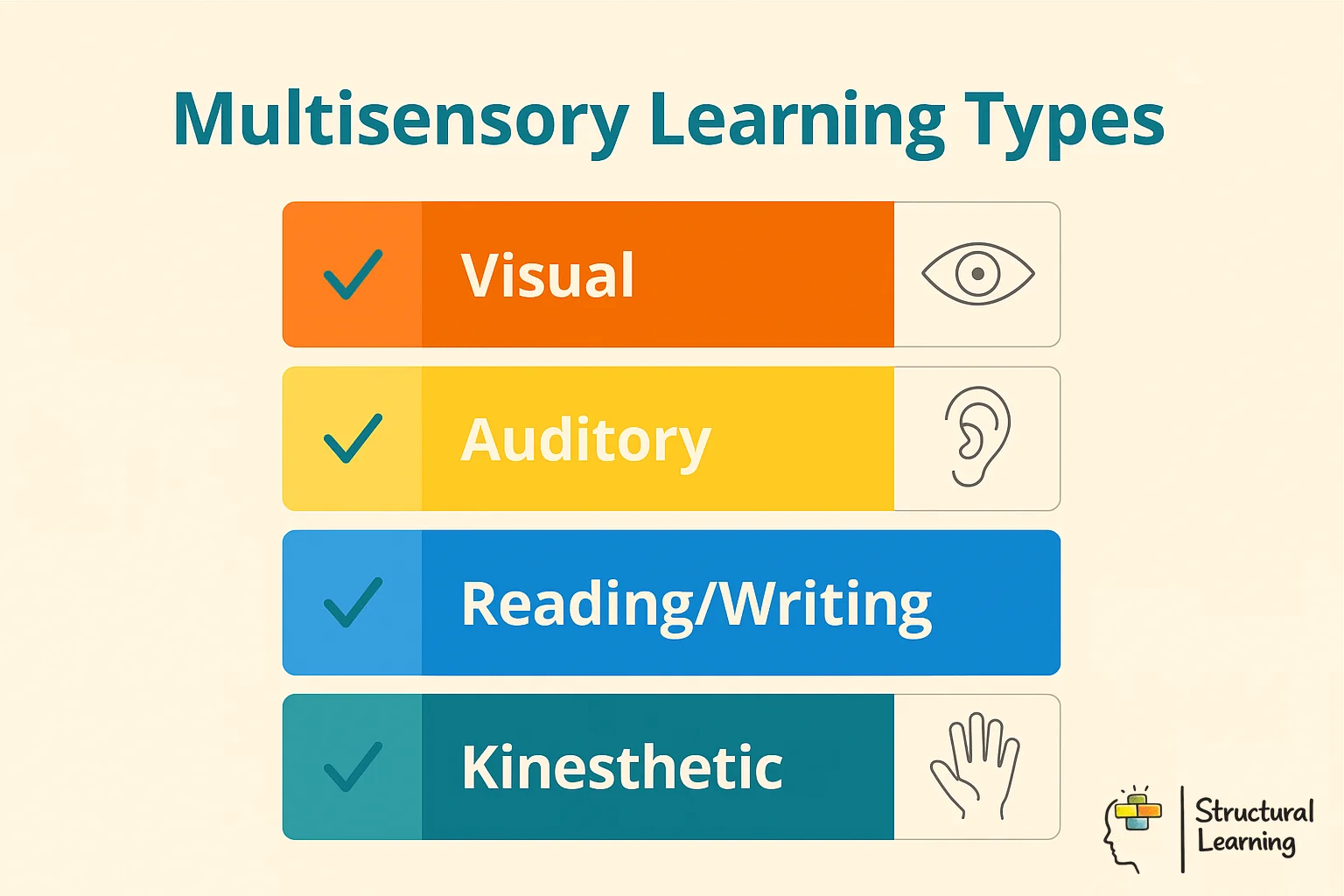
Engaging Visual, Auditory, Kinaesthetic, Tactile, and Olfactory/Gustatory senses creates redundant representations in the brain. This “multi-modal” processing makes abstract ideas more concrete and improves long-term memory access (Willingham, 2009).
Strengthening Understanding
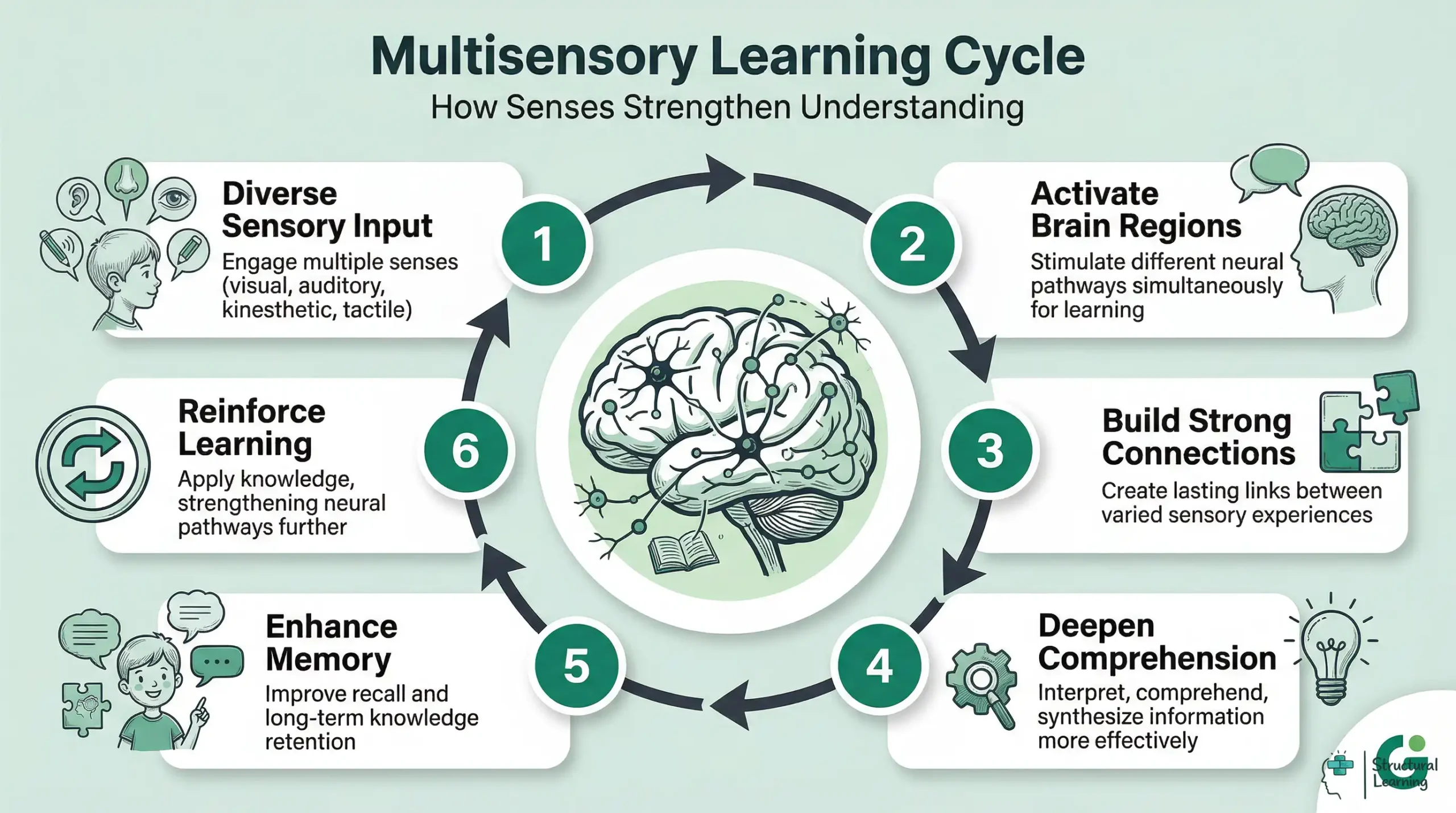
Research indicates that engaging more than one sense creates more constructive brain responses than single-sense learning. This improves comprehension skills and increases student motivation by making the curriculum accessible to those with diverse cognitive profiles.
Dyslexia Teaching Points
Practical strategies for using multisensory methods to support dyslexic learners.
Overcoming Writer’s Block
Structural Learning’s guide to using physical objects and ‘thinking with hands’ to spark literacy.